
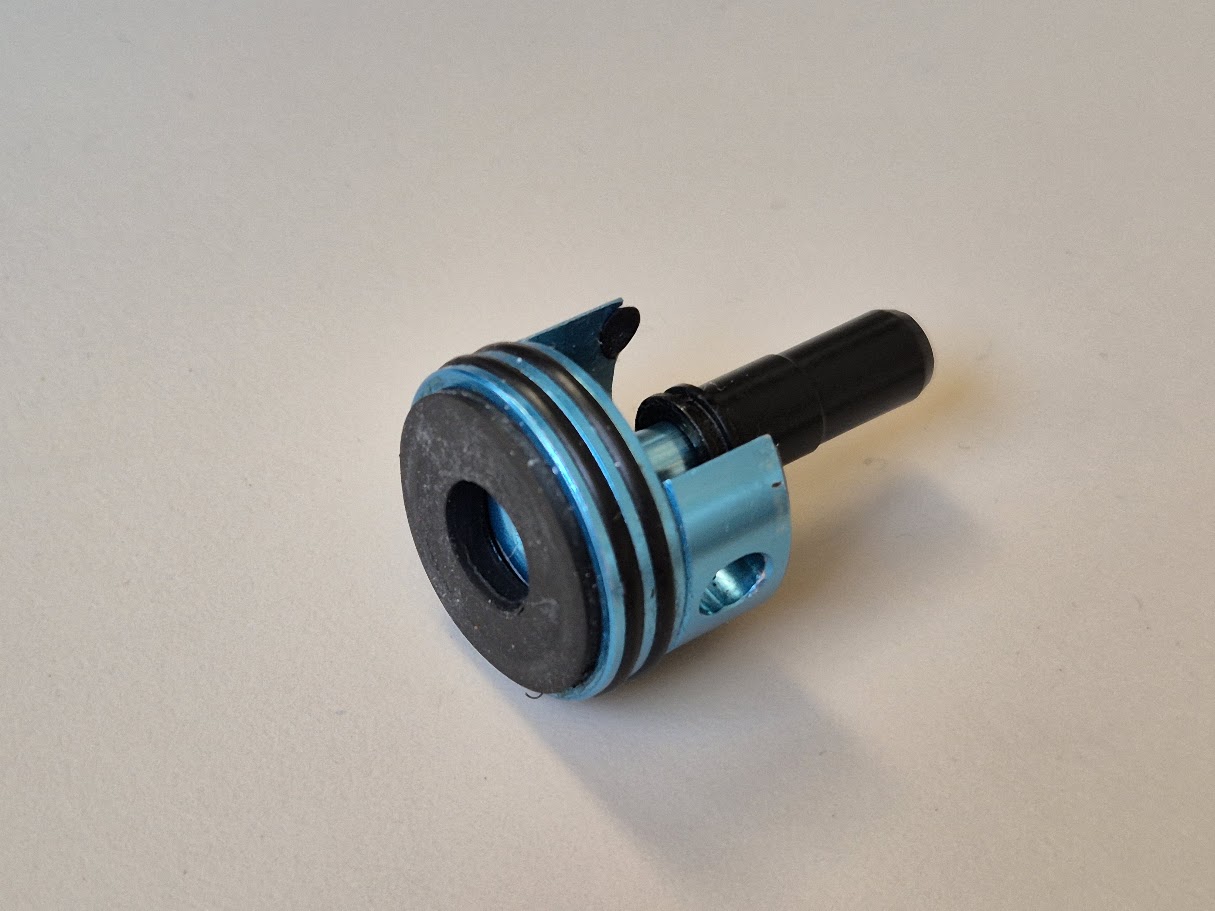
The cylinder head and nozzle close off the front end of the cylinder and together set the dead volume – the space where air remains once the piston reaches the end of its stroke. The simulator doesn’t guess that dead volume with a single number; it computes it from geometry: the hole in the sorbo pad, the metal part of the head with its bore, and the space inside the nozzle. That’s why there are a few measurements here – but the preset covers almost all of it, so in practice you only measure what you’ve changed.
Where to enter it
In the simulator: Cylinder head & nozzle. First pick a preset, then tweak individual measurements below it if needed.
Head preset
Cylinder head & nozzle preset. The preset sets head thickness, head-tube bore and sorbo dimensions all at once. Nozzle tip to cylinder edge is not part of the preset – that’s a per-replica measurement, so it stays free.
You can use the presets to experiment and see how individual parameters affect performance – but for real numbers you have to enter the exact measurements of your own replica.
The most important numbers
Head + sorbo thickness is a key parameter that strongly affects the effective cylinder volume, so you should measure it precisely with calipers.
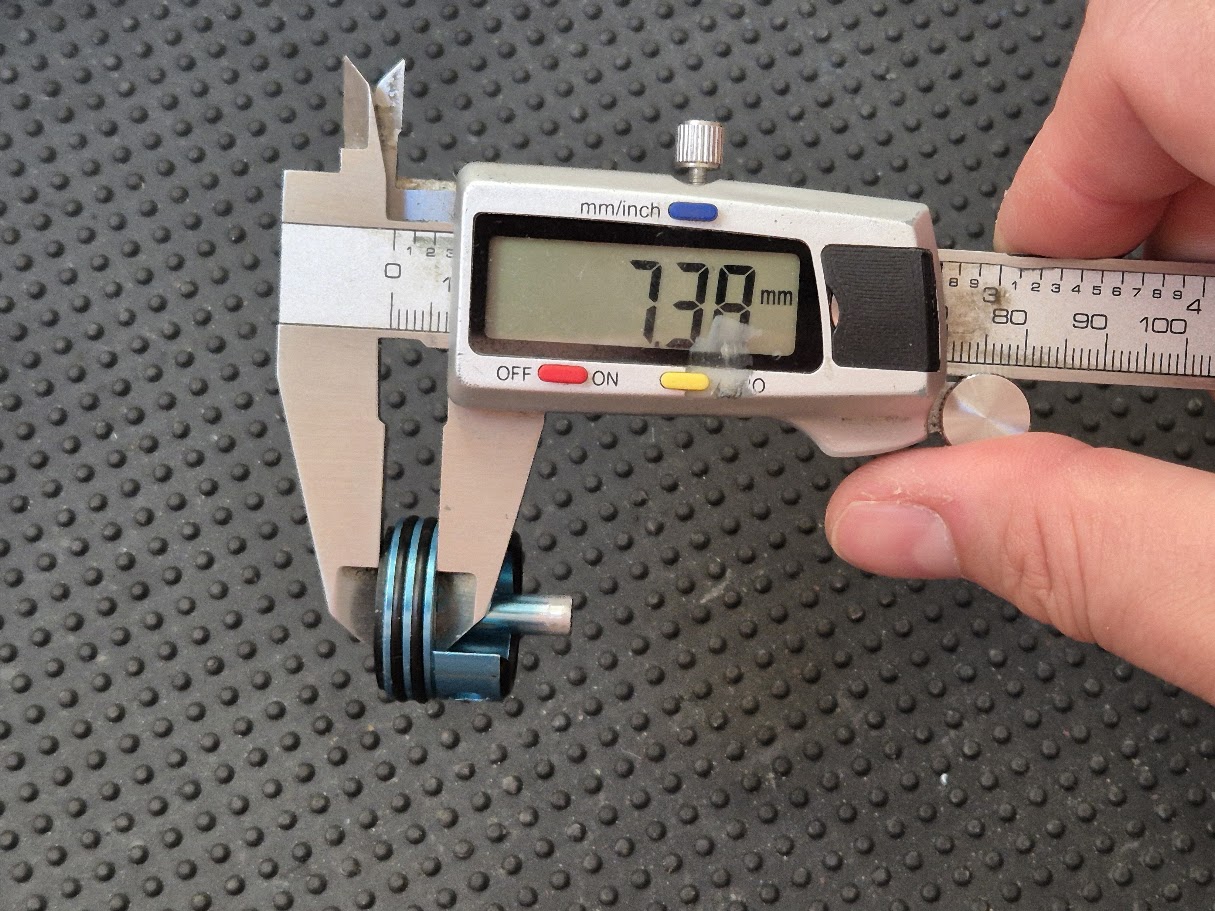 Measured across the whole head, sorbo pad included – here 7.38 mm.
Cylinder head tube bore is the inner diameter of the tube the nozzle slides on and the narrowest part of the whole air path. That’s why it noticeably affects energy delivery.
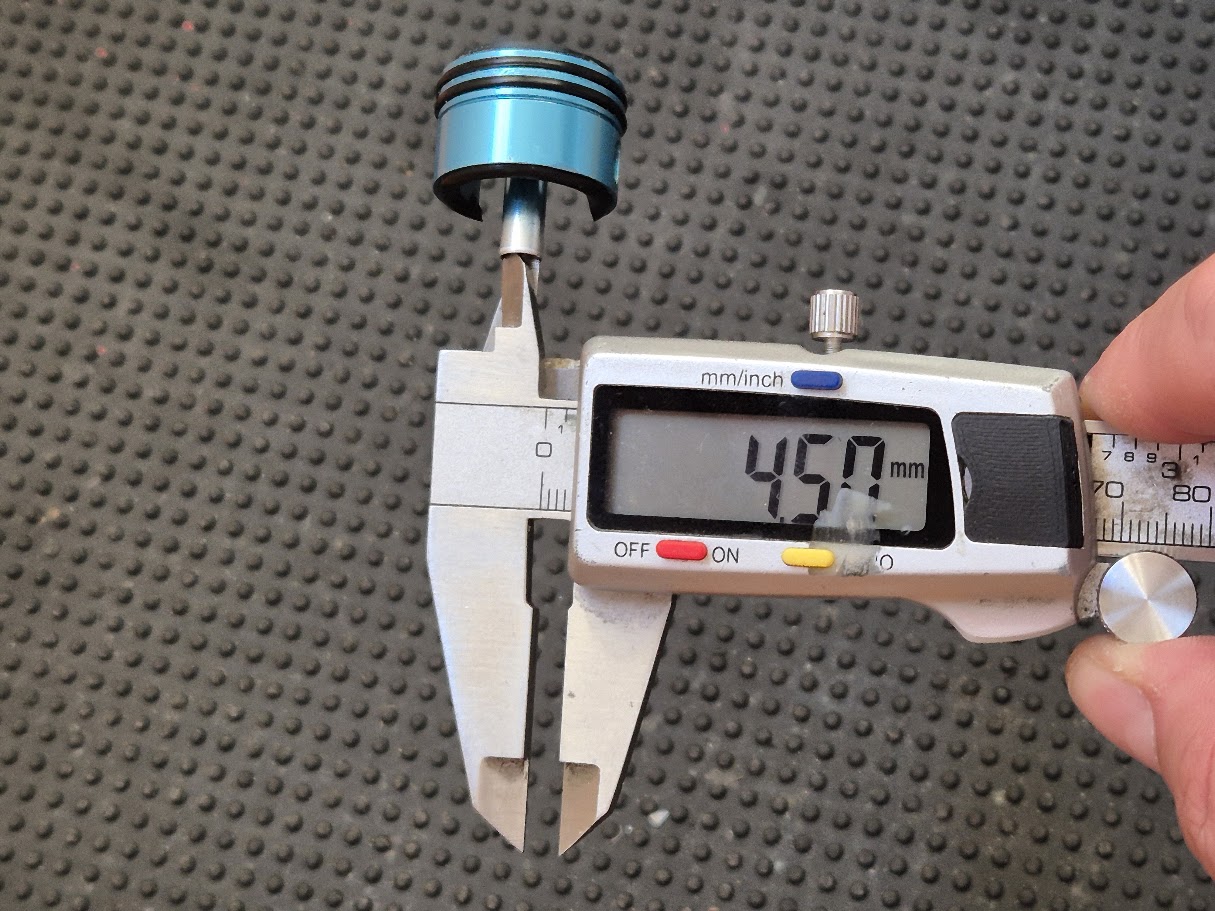 Measure the head-tube bore with the inner jaws – here 4.50 mm.
For those who cut pizza with a protractor
Less critical (but still relevant) numbers
Less critical, but still relevant if you want accurate results, are the sorbo pad thickness – which you measure from the sorbo surface to the metal part of the head – and the sorbo pad hole diameter.
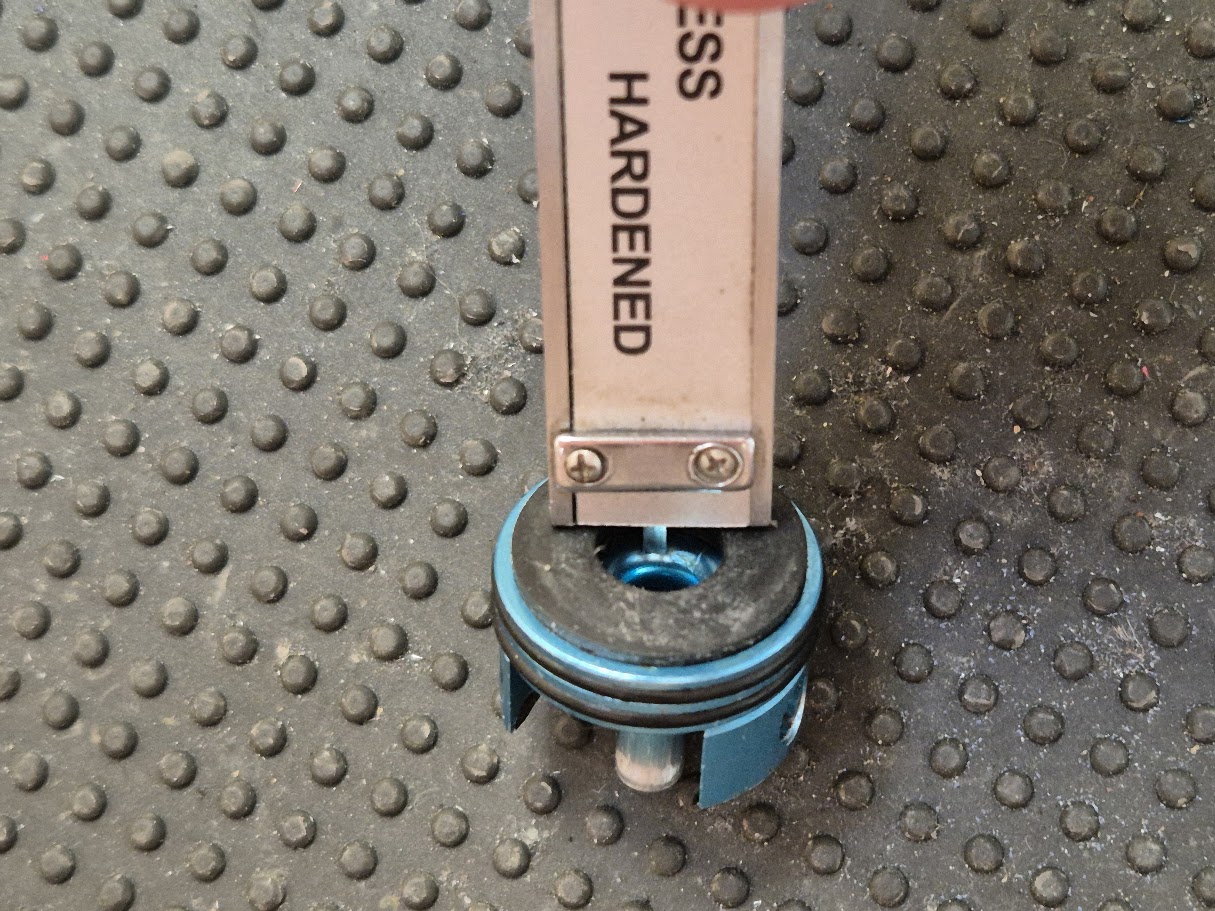 Measure the sorbo thickness with the depth rod – from the surface to the metal bottom of the hole.
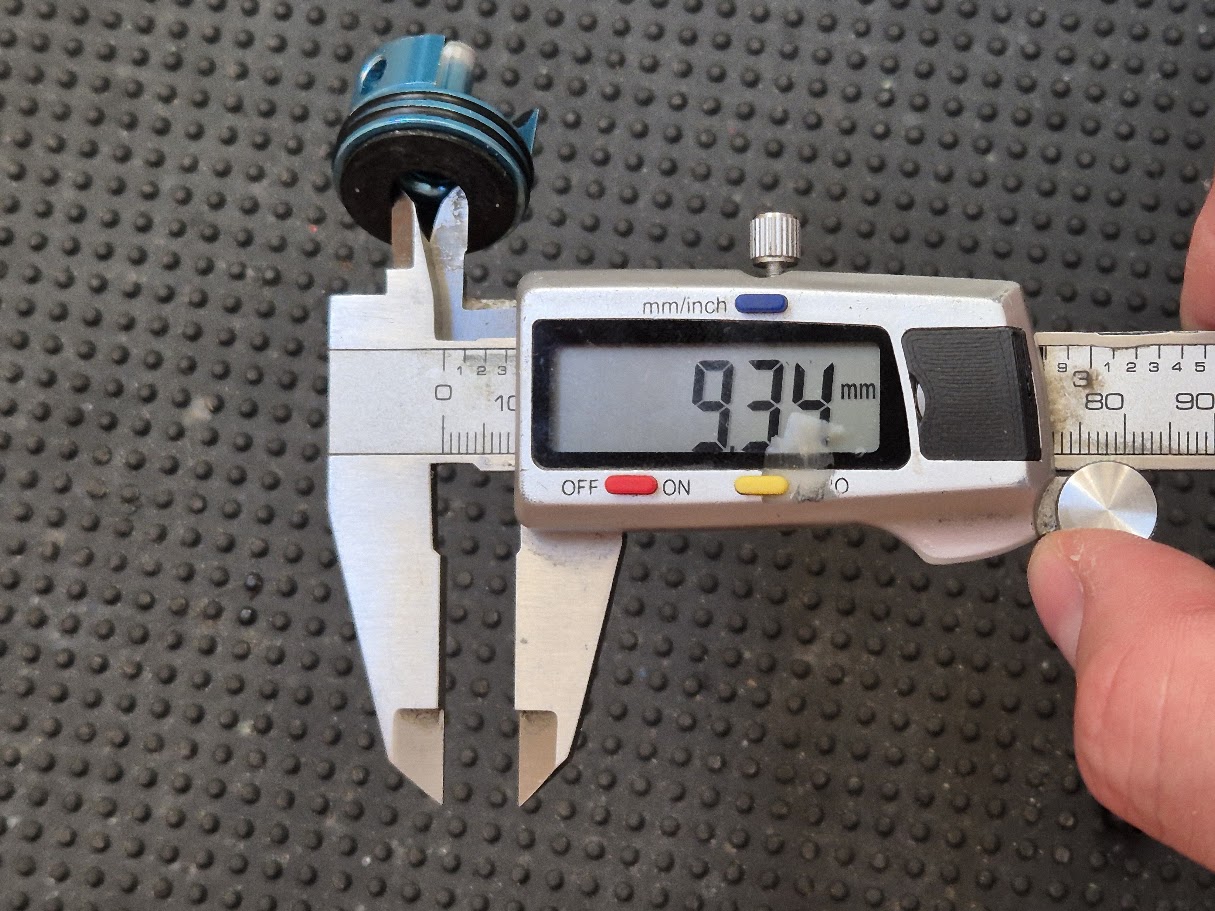 Diameter of the hole in the sorbo – here 9.34 mm.
Nozzle tip to cylinder edge, at the fully forward position, closes out the final dead volume. Put the cylinder head, nozzle and tappet plate into the gearbox, push the nozzle to its fully forward position and measure the distance from the nozzle tip to the front edge of the cylinder.
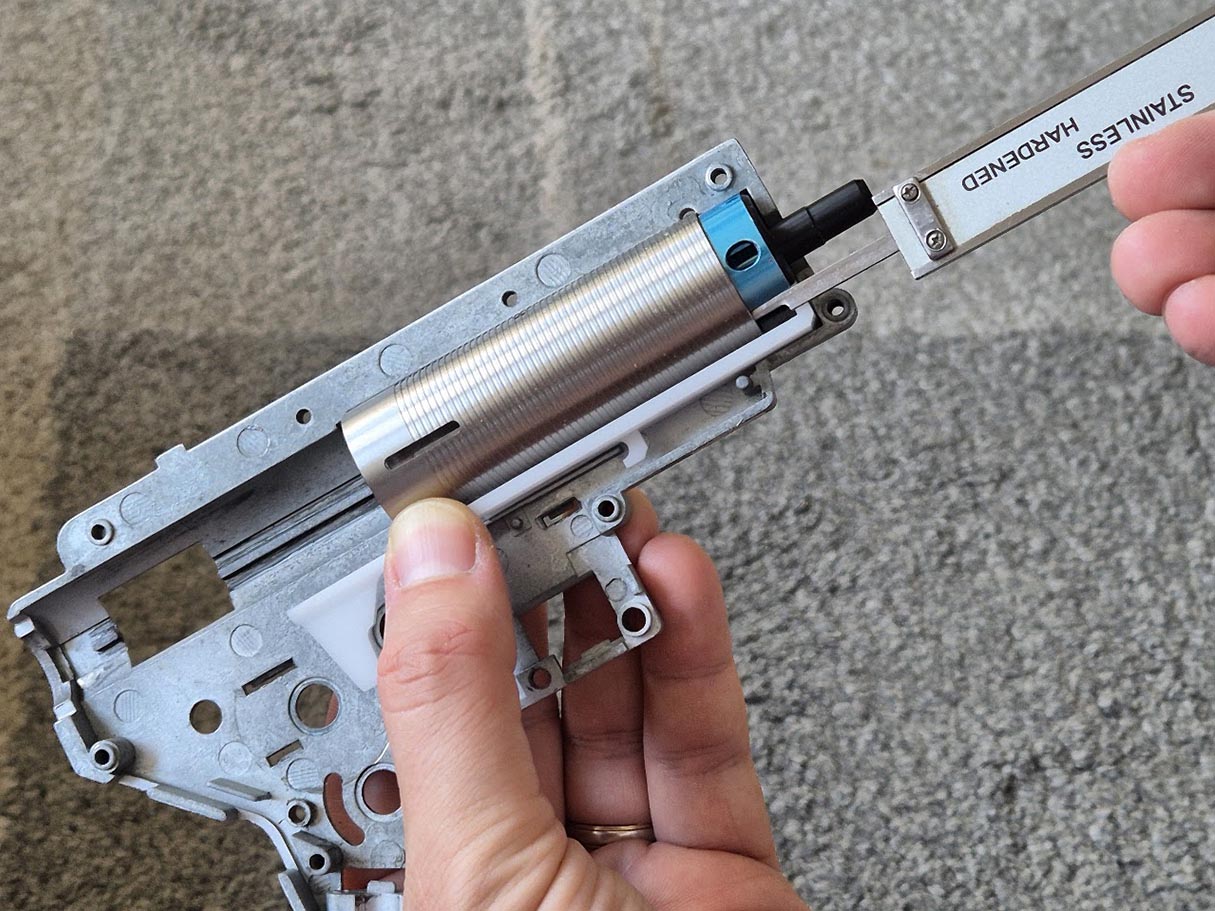 Put the head and nozzle into one gearbox half in the forward position, then measure from the nozzle tip to the cylinder.
True, because it seats against the hop-up bucking – which matters for the air seal – the nozzle in an assembled replica won’t reach the very end but will stop a few tenths short – but the difference is negligible.