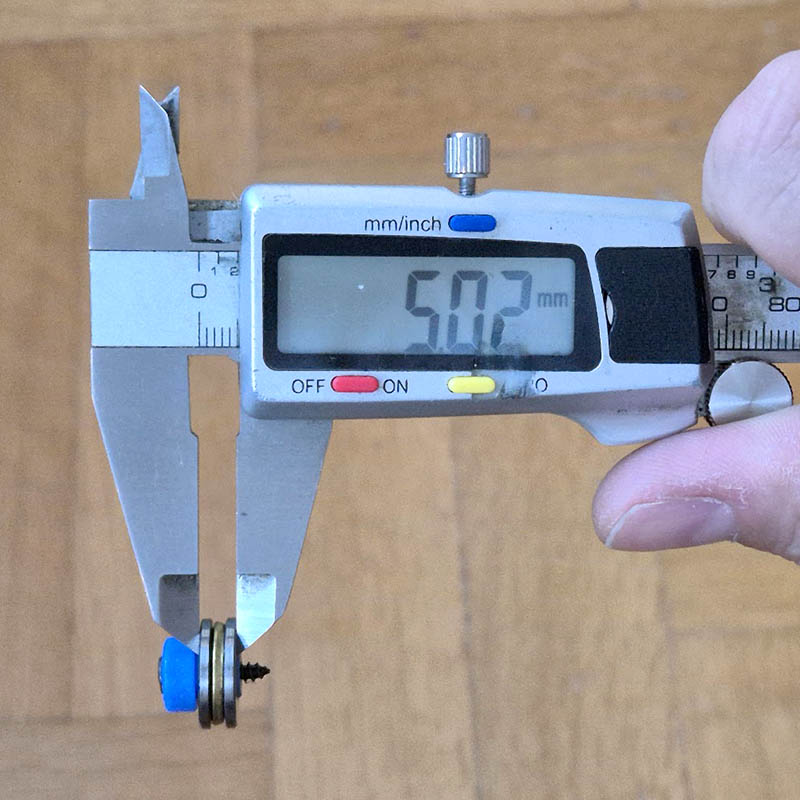
The piston assembly is one of the most important components, and one no previous model took into account – from its mass, which affects output power, to the geometry that determines when compression begins and how much the spring compresses.
The basics
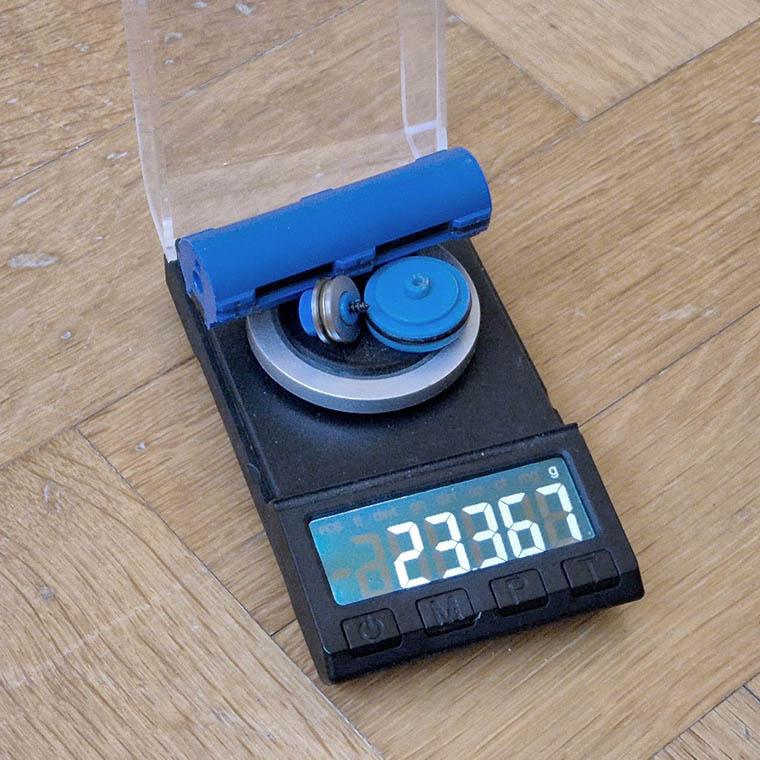
Piston + head mass – weigh the complete assembly – the piston together with its head and bearing – and enter that value.
It matters especially if you’ve swapped the piston or pulled a bearing out of it (see bearings on the spring page) – any such change alters the mass, so re-weigh it.
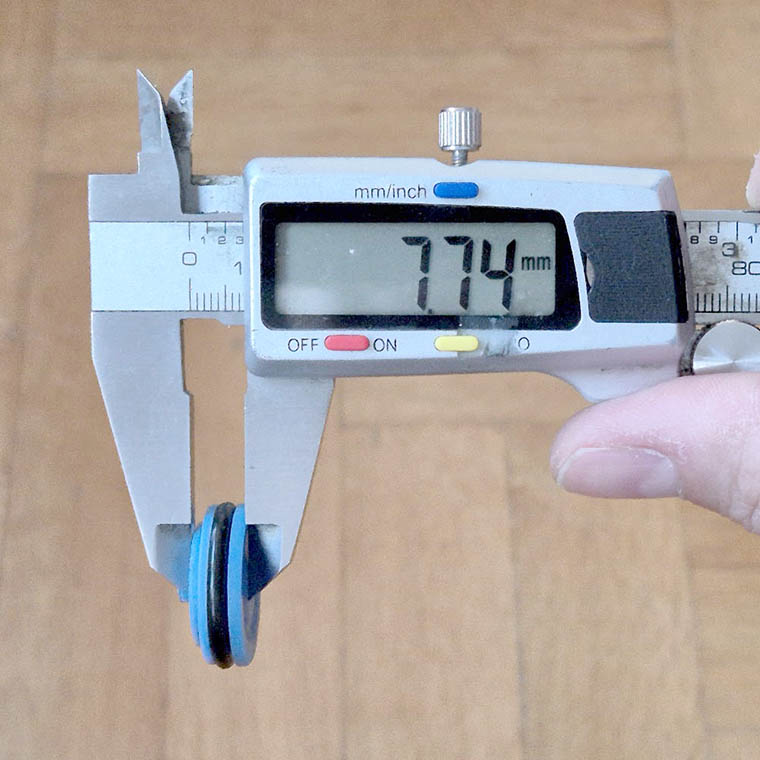
Piston head thickness – from the head face to the part that seats on the cylinder. Measure it with calipers.
O-ring offset – the distance of the O-ring center from the piston face. Sets when the seal passes the port.
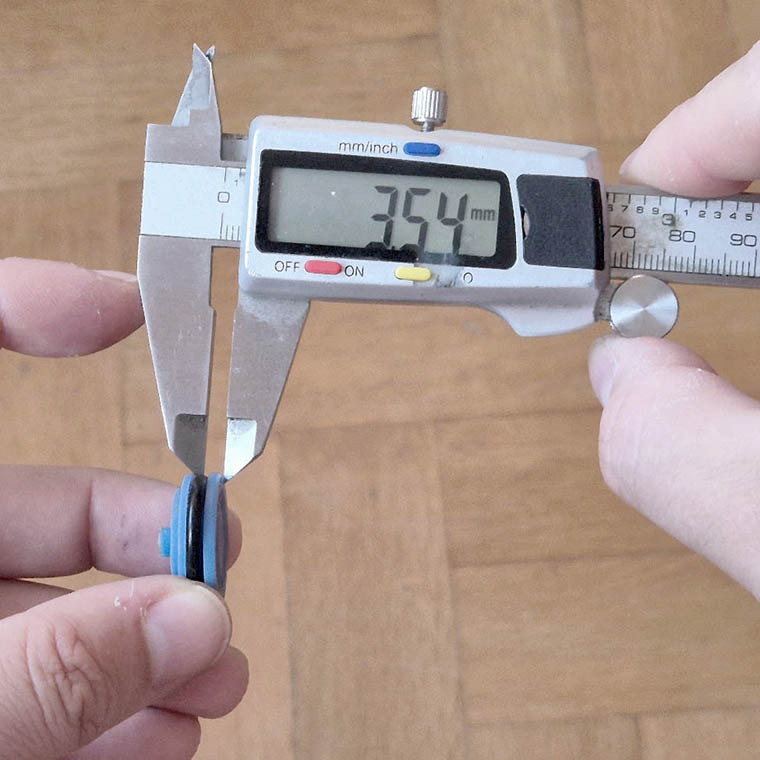
Piston head front wall – the thickness of the piston’s front wall. It’s best to put something with a flat surface into the piston (a marker, say) for the caliper’s depth rod to rest on.
Piston head bearing – the thickness of the ball bearing, or metal / plastic spacer, on the guide against the inner side of the piston head. Reduces the torsional load on the spring, but also increases preload.